
Understanding Credit Utilization in Relation to Debt Repayment
When dealing with debt, many individuals focus on various strategies to improve their financial situation, including managing credit scores. One common piece of advice is to lower credit utilization, which is the ratio of your current credit card balances to your total available credit limit. But is this practice truly useful when you’re primarily focused on paying off debt? Let’s dive deeper into this question.
What is Credit Utilization and Why Does it Matter?
Credit utilization is a key factor in determining your credit score, accounting for a significant percentage of the overall score. Generally, a lower utilization ratio indicates responsible credit management, which can positively influence your credit score. However, the actual impact on your financial situation may vary based on your specific circumstances.
How Credit Utilization Works
Your credit utilization is calculated by dividing your total credit card balances by your total credit limits. For example:
- Your total credit limit across all cards is $10,000.
- Your current balance is $3,000.
- Your credit utilization ratio is 30% (3,000 ÷ 10,000).
Many experts recommend keeping this ratio below 30% to maintain a healthy credit score. However, if you’re focused on paying off debt, this guideline may become a secondary concern.
Is Lowering Credit Utilization Effective When Paying Off Debt?
In short, lowering credit utilization can be beneficial for your credit score but may not directly help you in the process of paying off debt. Here are a few key considerations:
1. Credit Score vs. Debt Management
While a lower credit utilization rate can improve your credit score, it doesn’t reduce the amount of debt you owe. If your goal is to pay off debt, prioritizing payments to creditors is crucial. Focus on strategies like the snowball or avalanche methods, which help you tackle your debt more effectively.
2. The Psychological Factor
For some, managing credit utilization can provide a psychological boost. Seeing your credit score improve may motivate you to continue managing your debt. However, this motivation should not distract you from the fundamental goal of reducing your outstanding balances.
Strategies for Managing Debt Without Overemphasizing Credit Utilization
Here are some practical steps you can take to manage your debt effectively without getting too caught up in credit utilization ratios:
1. Create a Budget
A clear budget helps you understand your income and expenses, allowing you to allocate more money toward debt repayment. Track your spending to identify areas where you can cut back.
2. Prioritize High-Interest Debt
When paying off debt, consider focusing on high-interest accounts first. This approach will help you save money on interest payments over time, even if it temporarily raises your credit utilization rate.
3. Consider Debt Consolidation
If you have multiple debts, consolidating them into a single loan with a lower interest rate can simplify payments and potentially reduce your overall interest costs. However, consider the tradeoffs, such as potential fees and the risk of extending your repayment period.
4. Explore Debt Management Plans
Working with a credit counseling agency can help you create a debt management plan (DMP) that outlines your repayment strategy. This may include negotiating lower interest rates with creditors, which can make it easier to manage your payments.
5. Avoid Accumulating New Debt
While paying off existing debt, it’s essential to refrain from taking on new debt. This means being mindful of your spending habits and using credit sparingly, if at all.
What About Credit Settlement or Bankruptcy?
If you find yourself unable to manage your debts, you might consider options such as debt settlement or bankruptcy. Debt settlement involves negotiating with creditors to pay less than what you owe. However, this can significantly impact your credit score and should be approached with caution.
Bankruptcy is another option, but it’s a serious decision that can have long-lasting effects on your credit history. If you’re considering this route, consulting with a legal or financial professional is advisable to fully understand the implications.
Final Thoughts on Credit Utilization and Debt Management
While lowering your credit utilization can be a useful strategy for improving your credit score, it should not be your primary focus when paying off debt. Prioritizing debt repayment through budgeting, consolidating, and managing high-interest accounts is generally more effective in achieving financial freedom.
Next Steps for Effective Debt Management
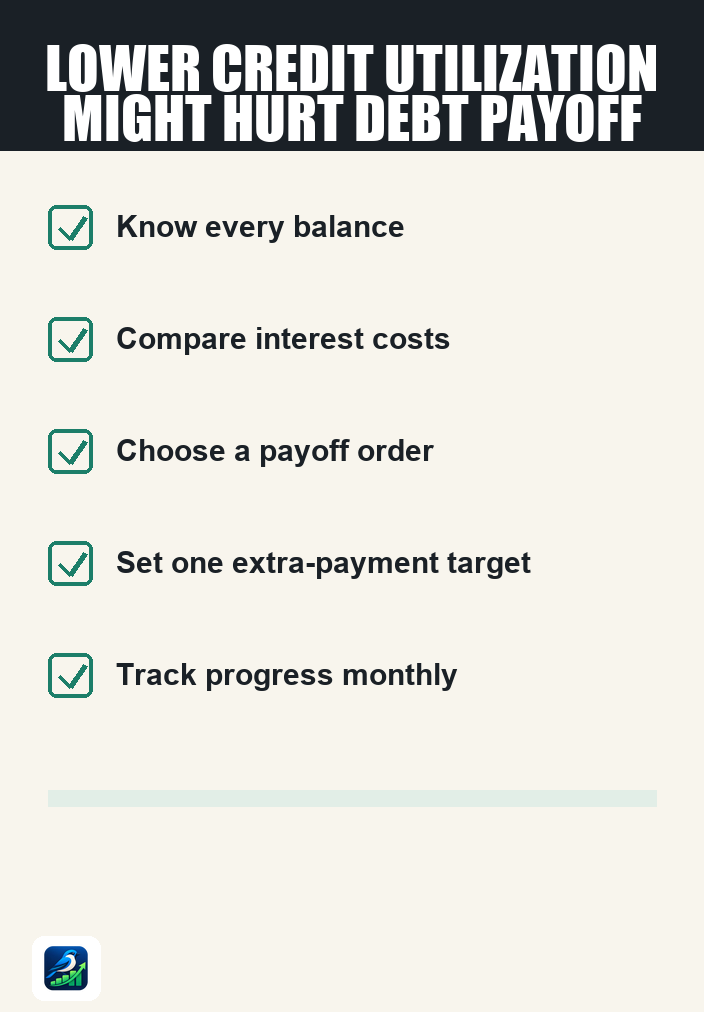
If you’re looking to improve your financial situation, take the following steps:
- Review your current debt and create a budget.
- Choose a debt repayment strategy that aligns with your goals.
- Explore options like debt consolidation or management plans if needed.
- Stay committed to your repayment plan and avoid accumulating new debt.
- Consider seeking professional advice for complex situations.
By focusing on these strategies, you’ll be better equipped to manage and ultimately eliminate your debt without becoming overly preoccupied with credit utilization ratios.



















